

Car Seat Buckle Keeps Getting Buried: 7 Fixes
Table of Contents
- Why Your Car Seat Buckle Keeps Getting Buried
- How to Untwist Car Seat Straps and Keep Them Straight
- How to Keep Car Seat Buckle Accessible Without Unapproved Products
- Car Seat Harness Fit and Adjustment Best Practices
- Using a Car Seat Buckle Holder to Prevent Burial
- Safety Checks: When Buckle Position Is Unsafe
- Frequently Asked Questions
Last Updated: October 21, 2026
Why Your Car Seat Buckle Keeps Getting Buried
When you're rushing to get your child into the car, the last thing you need is to dig through twisted straps hunting for a buckle that's vanished into the seat cushion.
The good news is that understanding WHY this happens makes it fixable. They're solvable with the right technique and, in many cases, a simple accessory designed specifically for this challenge.
Twisted Harness Straps Push the Buckle Down
Twisted straps are the number one culprit. When the shoulder strap or crotch buckle webbing twists, it creates tension that pulls the buckle down into the seat.
The twist happens because:
- Straps aren't aligned flat when you first install the seat
- Your child wriggles during the ride
- You're buckling quickly without checking strap alignment
A single twisted strap can bury the buckle completely. This is why many parents report the buckle disappears mid-trip even though it was accessible when they started driving.
Buckle Sinks Into the Seat Cushion
Soft seat cushions create a pocket where the buckle can sink. When you fasten the harness, the buckle tongue naturally settles into the plush material. Over time, especially with repeated use, the cushion compresses and the buckle sits deeper.
This is especially common with:
- Newer cars with thick, soft seat cushioning
- Seats with memory foam or gel padding
- Extended-use car seats that spend hours in the same spot
The buckle doesn't move, it just settles lower into the seat material with each use.
Harness Routing and Buckle Positioning Issues
How the harness webbing routes through your car seat affects where the buckle ends up. If the straps aren't routed correctly through the seat's harness guides, the buckle won't sit in an accessible position.
Check your car seat manual. The harness should route through specific slots depending on your child's height. Incorrect routing doesn't just bury the buckle, it can also affect how snugly the harness fits.
How to Untwist Car Seat Straps and Keep Them Straight
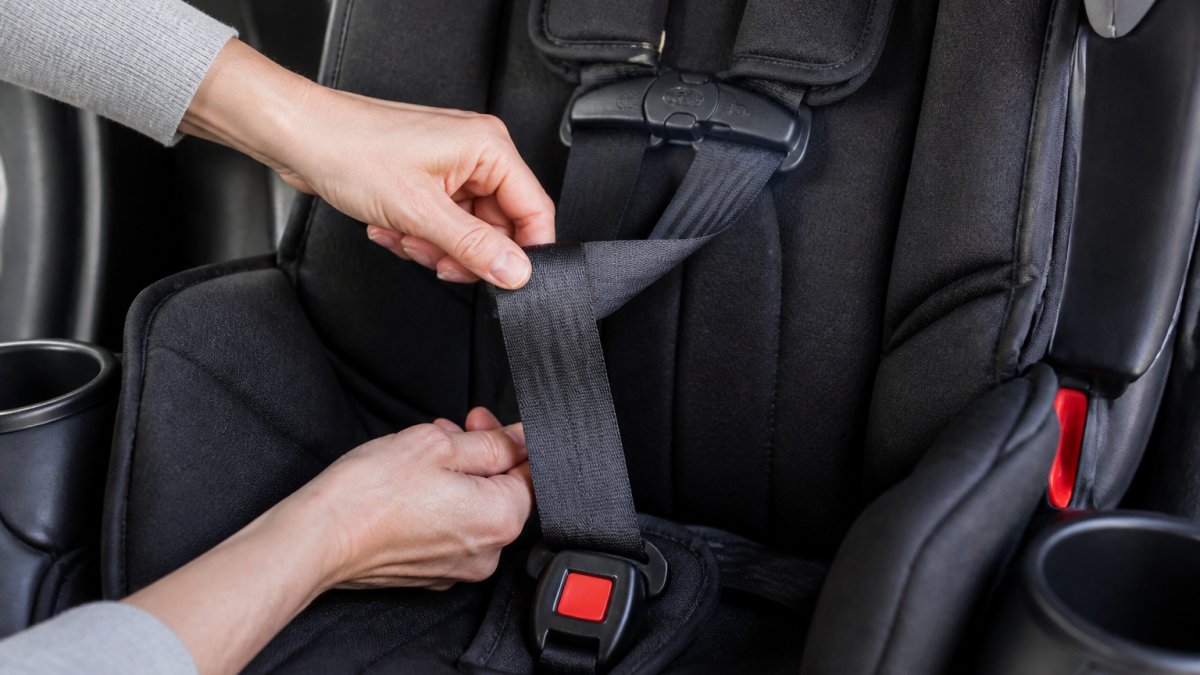
Twisted straps are fixable. The key is identifying the twist, straightening it carefully, and then keeping it straight. This takes about five minutes and should become part of your regular car seat check.
Identifying a Twisted Strap
Look at your car seat from the side. The shoulder straps should lie flat and parallel to each other. If one strap is spiraled or wraps around itself, you've found your twist.
Run your hand along the entire length of the strap from the shoulder down to the buckle. Feel for places where the webbing has rotated.
Common twist locations:
- Where the strap attaches to the car seat base
- Along the strap's length where your child sits
- Where the strap meets the buckle tongue
Step-by-Step Straightening Process
Step 1: Unbuckle and loosen. Fully unbuckle the harness.
Step 3: Rotate gently. With your other hand, rotate the strap away from the twist.
Step 5: Retighten and check. Tighten the harness back up.
Step 6: Do the pinch test. Pinch the strap at the shoulder.
Repeat this check weekly, or whenever you notice straps twisting again.
How to Keep Car Seat Buckle Accessible Without Unapproved Products
Once you've straightened the straps, the next step is keeping them that way. Proper harness tightness and correct belt routing prevent twisting and keep the buckle accessible.
Proper Harness Tightness and the Pinch Test
A harness that's too loose allows straps to twist and shift. A harness that's too tight restricts your child's movement and can be uncomfortable.
Use the pinch test to verify tightness:
- Pinch the harness strap at your child's shoulder
- You should only be able to pinch about one finger's width of fabric
- If you can pinch more than that, the harness is too loose
- If you can't pinch any fabric, it's too tight
A properly tight harness keeps straps aligned and prevents the buckle from sinking.
Check the harness tightness every time you buckle your child. Kids grow, clothing thickness changes with seasons, and straps loosen over time.
Adjusting Belt Routing for Buckle Visibility
Your car seat manual shows exactly where the harness should route through the seat. Following this routing keeps the buckle in the correct position.
For forward-facing seats, the shoulder straps typically route through slots at or slightly above your child's shoulder height.
If the buckle is buried and you've ruled out twisted straps, check the routing.
Infant Car Seat Strap Aligner Accessory →
Car Seat Harness Fit and Adjustment Best Practices
Beyond tightness and routing, two specific adjustments make a huge difference: shoulder strap height and crotch buckle placement. These determine where the buckle sits and how accessible it is.
Shoulder Strap Height and Buckle Position
The shoulder straps should sit at or just below your child's shoulders. If they're too high or too low, the entire harness geometry shifts, and the buckle moves with it.
Most car seats have multiple strap height positions. As your child grows, you'll move the straps up. Each adjustment affects buckle position.
To adjust:
- Locate the harness height adjustment (usually a button or clip on the back of the seat)
- Move the straps to align with your child's shoulder height
- Recheck that the buckle sits in an accessible spot
After adjusting height, always recheck the pinch test. The adjustment might affect harness tightness.
Crotch Buckle Placement and Chest Clip Positioning
The crotch buckle (also called the crotch strap connector) should sit low between your child's legs, not high on the belly.
The chest clip should sit at mid-chest, not on the neck or stomach. A correctly positioned chest clip keeps the harness centered and prevents straps from shifting.
Check both of these every time you buckle your child:
- Crotch buckle sits low and snug
- Chest clip is centered on the sternum
- Shoulder straps are flat and parallel
These three points working together keep the buckle accessible and the harness safe.
Using a Car Seat Buckle Holder to Prevent Burial
When twisted straps, improper routing, and harness adjustments still don't fully solve the problem, a strap aligner accessory can help. These simple devices keep straps flat and prevent twisting, which keeps the buckle from sinking.

How Strap Aligners Work
Strap aligners are slim sleeves that slide over the harness webbing. They hold the straps flat and prevent them from twisting during the ride.
Quality strap aligners are made from flexible silicone that moves with your child but prevents rotation.
The benefit isn't just convenience, aligned straps also maintain a more consistent harness fit, which supports child safety.
Compatibility With Different Car Seat Brands and Harness Types
Not all strap aligners work with all car seats. Standard 5-point harnesses (the most common type) work with most aligners.
Before buying, verify compatibility:
- Standard 5-point harness: most aligners work
- Special needs harness: check the product description
- Bus seat harness: check specifically for bus compatibility
BuckleBuddeez strap aligners work with most child car seats and special needs harnesses. They're made from durable silicone that stays flexible in cold weather and doesn't get hot in the sun.
The real value of a quality aligner is durability and ease of use. A well-designed aligner installs once and works consistently.
Safety Checks: When Buckle Position Is Unsafe
A buried buckle is usually an annoyance. Sometimes it is a warning sign. The difference is whether the buckle is merely hard to reach or whether the harness or seat belt is routed and positioned in a way that can reduce protection in a crash. Use the checks below to tell the two apart, and stop driving on the child-restraint seat until any unsafe condition is corrected.
Unsafe harness and buckle conditions
Check these every time you install the seat and any time the buckle starts disappearing:
- Harness fails the pinch test. At the child's shoulder, you should not be able to pinch more than about one finger's width of webbing. A loose harness lets the child move forward more than intended and lets straps twist and bury the buckle.
- Shoulder straps exit at the wrong height. For rear-facing seats, the straps should be at or just below the child's shoulders. For forward-facing seats, at or just above. Wrong-height routing changes the whole harness geometry and can pull the crotch buckle out of position.
- Crotch buckle rides on the belly. The crotch buckle should sit low and snug between the legs. If it sits high on the abdomen, it can concentrate crash forces on soft tissue instead of the pelvis.
- Chest clip is misplaced. The chest clip belongs at armpit level, across the sternum. On the neck or the belly, it does not keep the straps positioned over the shoulders.
Buckle crunch and seat-belt routing
"Buckle crunch" is the term for a vehicle seat-belt buckle (the receptacle, or the latch plate) pressing into the car-seat shell or being forced into a bent position by the belt path.
Warning signs of buckle crunch:
- The seat-belt buckle or latch plate rests against the car-seat shell instead of sitting clear.
- The belt has to bend sharply to reach the buckle.
- The buckle is pulled into the seat cushion so far that the release button is hard to press.
- The belt path crosses the car-seat shell at an angle rather than lying flat.
If you see any of these, do not force it. Re-route the belt per the car-seat manual and the vehicle owner's manual, try a different seating position if the manuals allow it, or have a certified child passenger safety technician check the installation.
When the seat itself may need to be replaced
Adjustment fixes most buried-buckle problems. Replacement is the answer when:
- The buckle or harness will not stay in the correct position after adjustment.
- The webbing is frayed, cut, or stiffened.
- The buckle does not click or release cleanly.
- The seat is past its expiration date printed on the shell or label. Most seats are good for six to ten years from the date of manufacture, but use the date on your specific seat.
Frequently Asked Questions
Why does my car seat buckle keep getting buried in the seat?
Your car seat buckle gets buried when harness straps twist, pushing the buckle down into the seat cushion, or when the buckle sinks naturally into soft upholstery. Twisted straps are the most common cause. As your child moves during the drive, the shoulder and crotch straps rotate, tangling the buckle tongue beneath layers of webbing. Poor belt routing through the car seat's slots can also position the buckle lower than intended, making it harder to reach.
How do I know if my car seat harness is fitted correctly?
Use the pinch test: pinch the harness strap at your child's shoulder. You should not be able to pinch any excess webbing between your fingers. The strap should sit snug against your child's body without twisting. The shoulder straps must be at or slightly above shoulder height, and the chest clip should sit at armpit level. The crotch buckle should position the webbing between your child's legs without gaps. Check your car seat's manual for exact height and positioning requirements for your child's size.
Can I use a buckle holder or strap aligner with my car seat?
Yes, strap aligners designed specifically for car seats can prevent twisting and keep buckles accessible. The Car Seat Strap Aligner Accessory ($29.99) works with most standard 5-point harnesses, special needs harnesses, and bus latching systems. These silicone sleeves keep straps flat and aligned, preventing the buckle from sinking or hiding. They're compatible with most major car seat brands, install in minutes, and are dishwasher safe. Always verify compatibility with your specific car seat model before purchase.
Do strap aligners affect my child's safety in a crash?
Approved strap aligners have passed safety testing. BuckleBuddeez underwent dynamic crash testing on Federal Motor Vehicle Safety Standard (FMVSS 213) sleds and showed a measurable reduction in chest g-force acceleration, meaning the harness system performs safely even with the aligner in place. Strap aligners keep the harness properly positioned and prevent twisting, which can actually improve crash protection by maintaining correct harness routing and tension. Always choose products that have undergone official crash testing.